
How I Shaved 32 Minutes Off My Half Marathon Time in 90 Days (And How You Can Too)
- Andrew Caine

- Sep 23, 2025
- 7 min read
I'll be straight with you – when I signed up for my first half marathon in May, I had no clue what to expect.
But by race day in September, I'd knocked 32 minutes off my time and completely transformed how I approached running. From crawling across the finish line at 2:04:24 to confidently cruising to a 1:32:12 PB (chip time).
Here's exactly how I did it, without the fluff or fancy gadgets everyone tries to sell you.

The Wake-Up Call: My First Half Marathon Reality Check
June 22nd was meant to be a simple time trial around Stanwick and Rushden lakes.
2 hours and 4 minutes later, I was literally starting at my watch waiting for it to end.

My splits told the real story – I'd gone out too hard (because that's what beginners do), held on for dear life through the middle section, then completely fell apart in the final 5K. My pace dropped from a semi-respectable 5:30/km to a soul-crushing 6:30/km crawl.
That's when reality hit: I needed a proper plan, not just the "run until it hurts then run a bit more" approach I'd been using.
The Game-Changer: Progressive Overload for Runners
Most people think progressive overload only applies to the gym. Wrong.
Your running needs structure just like your squats and deadlifts. The difference? Instead of adding weight to the bar, you're manipulating distance, intensity, and frequency over time.
Here's what I did differently:
Month 1 (May-June): Built the foundation with 3 easy runs per week, focusing on time on feet rather than speed. Total weekly distance: 25-30km.
Month 2 (June-July): Introduced structured workouts while bumping total volume to 35-40km per week. Added one tempo session and one interval session.
Month 3 (July-September): Peak training with 45-50km weeks, incorporating race-specific work and longer runs up to 18-20km.
The key wasn't going mental from day one. It was consistent, manageable increases that my body could actually adapt to. No heroics, no Instagram-worthy sufferfests – just intelligent progression.

The Three-Run System That Changed Everything
Forget complicated training plans with 15 different types of runs. I used three types of runs, and they did everything I needed:
1. Short & Spicy (Above Race Pace)
These were my speed sessions – typically 400m to 1km intervals at a pace faster than my goal race pace. Think 4:00-4:10/km when my target race pace was 4:20/km.
Example session: 6 x 800m at 4:05/km pace with 90 seconds recovery between reps.
These taught my legs to turn over quickly and developed the speed I'd need for the final sprint (or to drop the hammer if I was feeling good).
2. Medium & Steady (At Race Pace)
The confidence builders. These runs were all about getting comfortable being uncomfortable at race pace. Usually 3-6km segments at my target 4:20/km pace, sandwiched between easy running.
Example session: 2km easy, 5km at race pace, 2km easy.
By race day, 4:20/km felt like cruising because I'd done it so many times in training. No surprises, no panic – just muscle memory.
3. Long & Easy (Below Race Pace)
The bread and butter. These slower runs (5:15-5:45/km) built my aerobic base and taught my body to use fat as fuel efficiently. Started at 10km and gradually built to 20km.
The magic wasn't any single run – it was how they worked together. Speed work made me fast, tempo work made me confident, and long runs gave me the engine to sustain it all.
Strength Training: What I Wish I'd Known Earlier
Here's where most runners get it wrong. They either skip strength training entirely or try to be powerlifters and runners simultaneously.
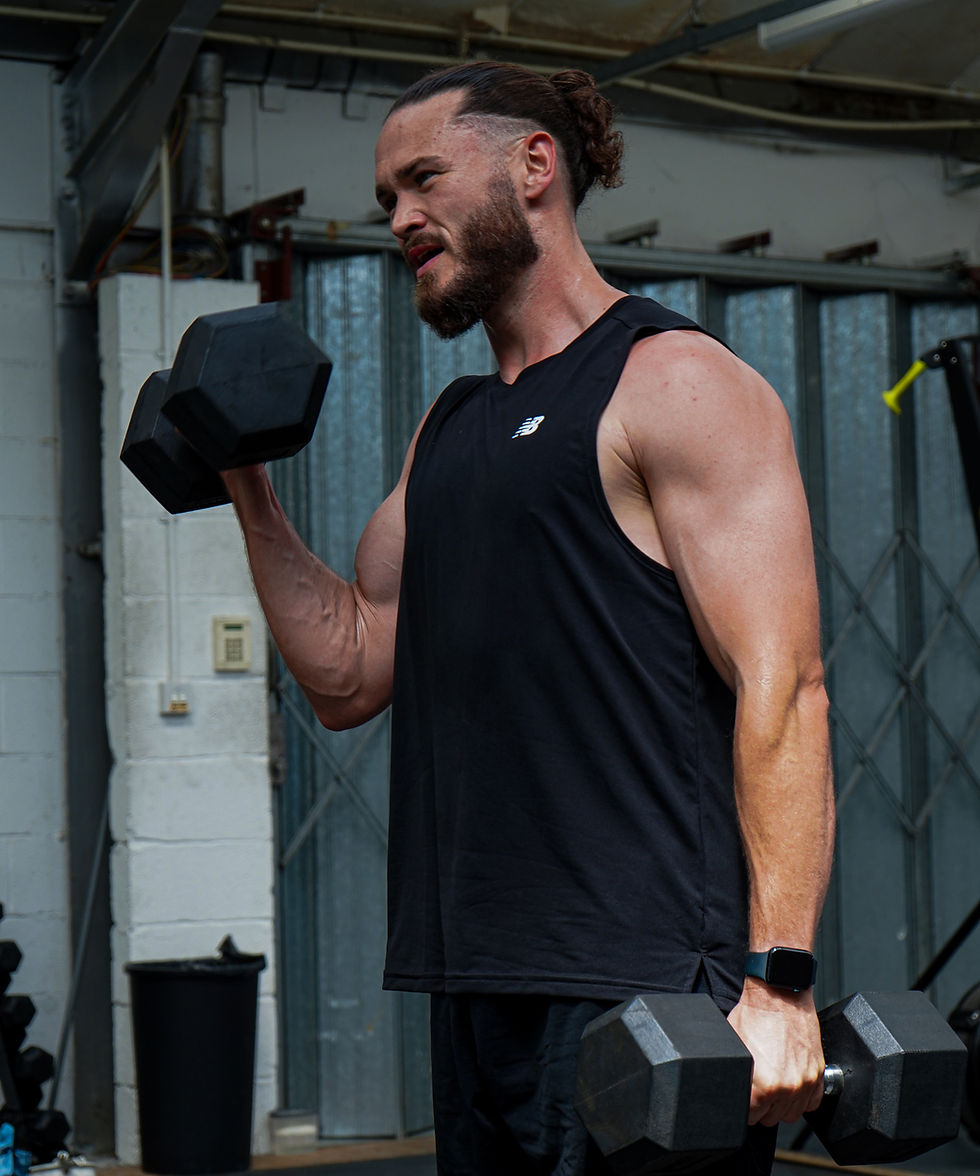
I made this mistake initially. Heavy back squats, deadlifts, trying to hit PBs while ramping up my running. Result? I was constantly tired, my legs felt like concrete, and my running performance suffered.
The solution was switching to single-leg dominant exercises:
Bulgarian split squats (3 sets of 8-12 each leg)
Single-leg Romanian deadlifts (3 sets of 8-10 each leg)
Lateral lunges (3 sets of 10 each leg)
Single-leg glute bridges (3 sets of 12-15 each leg)
Why this works better: Running is literally jumping from one leg to another. These exercises train that exact pattern while building the unilateral strength and stability that bilateral lifts miss.
I reduced my gym sessions from 4 to 2 per week as training intensified, focusing on maintenance rather than progression. The running was the priority, and everything else supported it.
The Diet Reality Check: No Magic, Just Consistency
Let me save you some time and money – there's no special "runner's diet" that'll magically make you faster.
I tracked my calories and macros using a simple app, aiming for:
2,450 calories per day (I was in a slight deficit to drop a few kg)
170g protein (to support recovery and maintain muscle)
The rest from carbs and fats (weighted toward carbs for fuel)
My food was boring but effective:
Breakfast: Two slices of toast and 4 eggs
Lunch: Rice, chicken, and vegetables
Dinner: Pasta with lean mince and salad
Snacks: Greek yogurt, fruit, protein shakes
But here's the real talk – I still had takeaways on several occasions, wine and other alcohol here and there, and the occasional "fuck it" moment where I ate pizza.
The difference? I planned for it. If I knew Saturday was going to be messy, I'd eat lighter Friday and Sunday. If I had a big dinner planned, lunch would be smaller.
Consistency doesn't mean perfection. It means showing up more often than you don't.
The Mental Game: Systems Beat Motivation Every Time
Here's what nobody tells you about endurance training – the physical adaptation is the easy part. Your legs will get stronger, your lungs will get more efficient, your heart will adapt.
The hard part is showing up when you don't feel like it.
There were weeks when I felt flat and every run was a slog. Weeks when I questioned why I was doing this. Weeks when Netflix looked infinitely more appealing than another training session.
But I had rules:
Never skip a week entirely – even if I only did two runs instead of three
Adjust, don't abandon – feeling tired? Do the session at an easier pace
Something beats nothing – 20 minutes is better than zero minutes
The best example was week 8 of training. I was stressed at work, hadn't slept well, and felt like absolute shit. My planned workout was 5 x 1km at race pace.
Old me would've skipped it entirely or tried to push through and probably hurt myself.
Instead, I did 3 x 1km at a slightly easier pace. Not perfect, but I stayed in the rhythm and didn't break the chain.
That's the difference between people who hit their goals and those who don't – they show up even when they don't want to, but they're smart about how they show up.
The Numbers Don't Lie: What 90 Days of Consistency Looks Like
September 14th: Northampton Half Marathon. Race day.
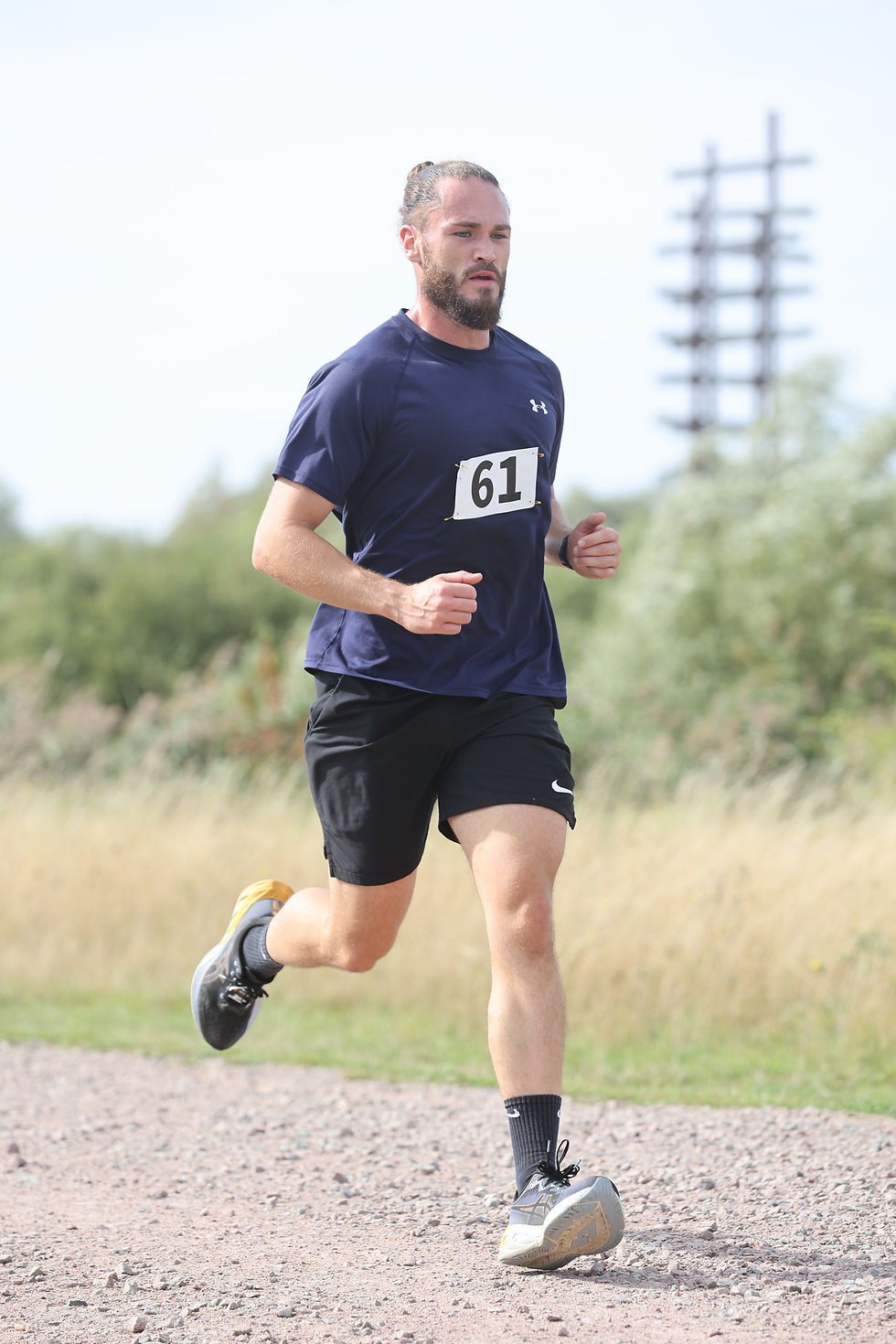
The gun went off and for the first time in a running event, I felt in control. My watch beeped every kilometer at almost exactly 4:20/km. No drama, no panic, just smooth, controlled effort.
At 15km, I still felt strong. At 18km, I knew I had this. At 20km, I actually picked up the pace.
Final time: 1:32:12. Average pace: 4:22/km.
32 minutes faster than my starting time. But more importantly, I finished feeling like I could've kept going instead of crawling across the line.
The numbers tell the story:
Consistent pacing: My fastest and slowest kilometers were only 15 seconds apart
Strong finish: My final 5km was actually faster than my first 5km
Energy management: Heart rate stayed in my target zone throughout
This wasn't down to talent, genetics, or expensive gear. It was 90 days of showing up with a plan and trusting the process.

Your Roadmap: How to Apply This System
The beauty of this approach is its simplicity. Here's how to adapt it to your situation:
Month 1: Build the Base
3 runs per week, all easy pace (you should be able to hold a conversation)
Focus on time, not distance – start with 20-30 minutes per run
Add 10% to your total weekly time each week
Month 2: Add Structure
Keep 2 easy runs, add 1 structured session (intervals or tempo)
Gradually increase total weekly volume
Practice race pace in small doses (2-3km segments)
Month 3: Race Preparation
Include race-specific work (longer tempo runs at race pace)
Build your longest run to 90% of race distance
Practice race-day fuelling and pacing strategies
Support with smart strength training:
2 sessions per week maximum during heavy running phases
Focus on single-leg exercises and running-specific movement patterns
Reduce volume as race day approaches
Fuel it properly:
Track calories and protein for the first few weeks to establish patterns
Plan for social events and indulgences rather than feeling guilty about them
Prioritise sleep and hydration over expensive supplements
The Bottom Line
I'm not special. I'm not genetically gifted. I didn't have access to elite coaches or cutting-edge technology.
What I had was a simple system and the discipline to stick to it even when I didn't feel like it.
90 days of consistent, progressive training. 90 days of showing up. 90 days of trusting the process instead of looking for shortcuts.
The result? A 32-minute PB and a completely different relationship with running.
Your goals might be different – maybe you want to break 2 hours, or just finish your first 5K without walking. The principles remain the same: progressive overload, consistency over perfection, and systems that support your bigger picture.

Ready to build your own system?
I've put everything from my training – the progression templates, workout structures, nutrition guidelines, and mental strategies – into a comprehensive guide called "Level Up Your Running."
It's free, it works, and it'll save you from the trial and error that cost me months of progress in the beginning.
Claim the FREE Ebook "Level Up Your Running" - https://www.andrewcainept.com/#leveluprun
Stop guessing. Start progressing.


Comments